VR apps and AI trainers for pharma and medtech teams

White-label patient-perspective simulations and conversational AI assistants, built under your brand and designed together with your medical, training and compliance teams.

VR app · 01

Empathy VR: patient-perspective simulations

Short, immersive experiences in which field teams, clinicians and researchers attempt everyday tasks the way a patient does, with the movement, coordination and emotional difficulties of a condition built into the scenario. We build for neurological movement disorders such as Huntington's disease chorea, and the approach carries to any condition that is hard to explain in words.
  • Progression, not a snapshot. One patient and family followed from early to advanced disease.
  • Physical and emotional. Loss of coordination, frustration, and the strain on care partners.
  • Short by design. Sessions are designed to run about 15 minutes per learner, with a facilitated debrief.
  • Built for Meta Quest 3 and Apple Vision Pro.
See a public case study of VR in field training
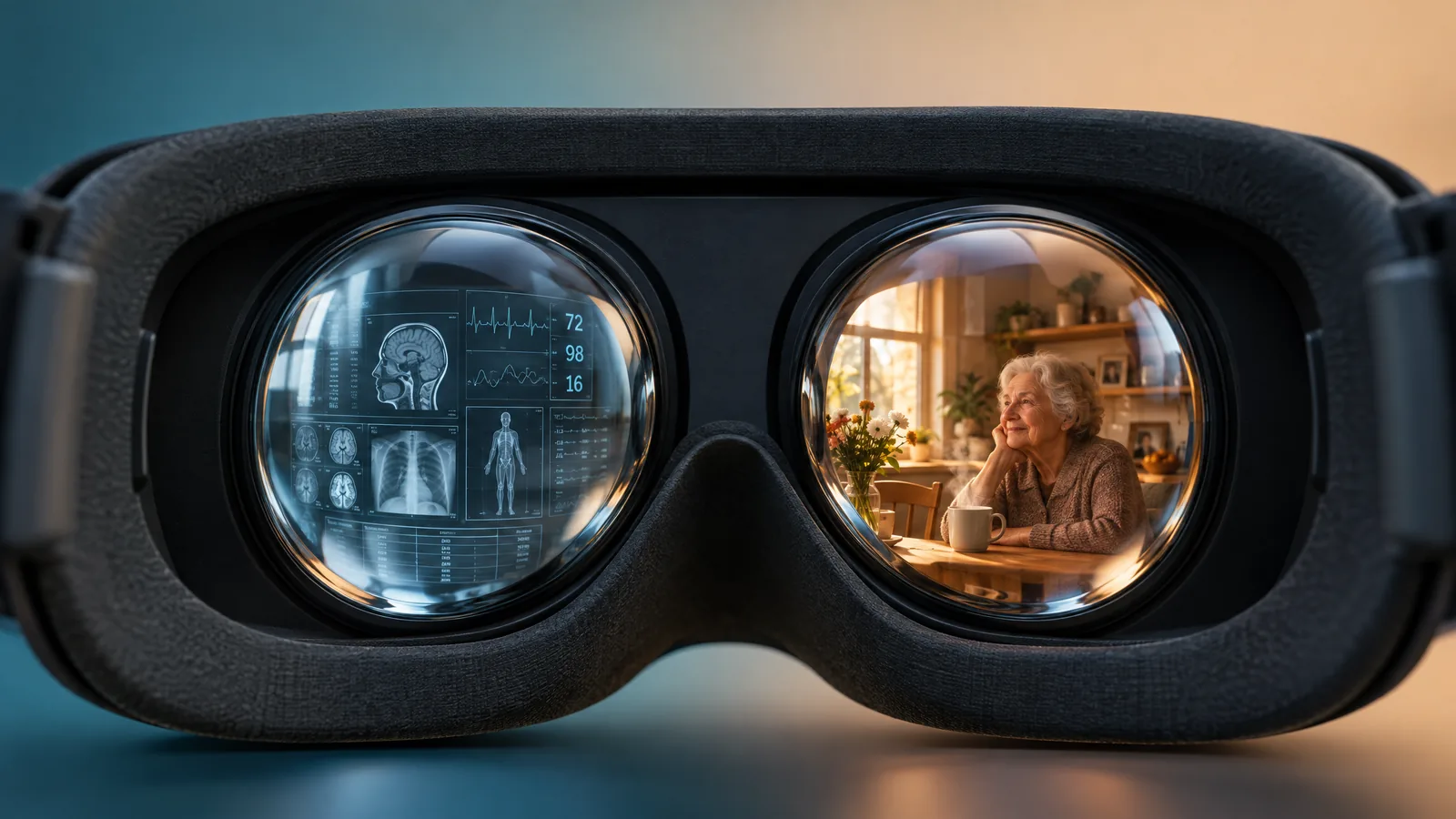
Close-up of a VR headset. One lens shows clinical data (brain scans, an X-ray, vital signs); the other shows an elderly woman smiling at her kitchen table.
Concept illustration
VR app · 02

Training environments for symptom recognition

A safe practice ground where learners recognise and grade motor symptoms and learn to tell disease stages apart, using standardised cases they can repeat as often as they need. Case content, assessment criteria and scoring are defined with your medical team, and learner performance is tracked so a pilot can show what changed.

  • Repeatable, standardised cases for consistent practice across sites and cohorts.
  • Analytics and iteration after deployment, based on how learners actually perform.
  • Education, not diagnosis. These are training tools; they are not diagnostic devices and do not replace clinical training.
Why we plan measurement before we build
A typical session
  1. Brief. The learner sees the objective for this case.
  2. Case. A standardised patient case plays out in VR.
  3. Assess. The learner rates the symptoms and stage.
  4. Feedback. Ratings are compared with the reference set by your experts.
AI assistant · 03

Conversational AI virtual patients and trainers

Practise a medical interview with a virtual patient who answers in natural speech instead of following a script. Our 3D avatars use voice interaction, real-time lip-sync, gestures and facial expressions. An AI trainer can guide learners through a scenario, answer questions about the case and run the debrief, in a headset or on screen.

  • Virtual patients for history-taking, communication skills and difficult conversations.
  • AI trainers that coach, explain and debrief, working from the case material you approve.
  • Guardrails first. Medical content, tone and boundaries are set with your medical and compliance reviewers before launch.
  • Combines with Empathy VR: experience the symptoms, then talk to the patient.

Also in the portfolio

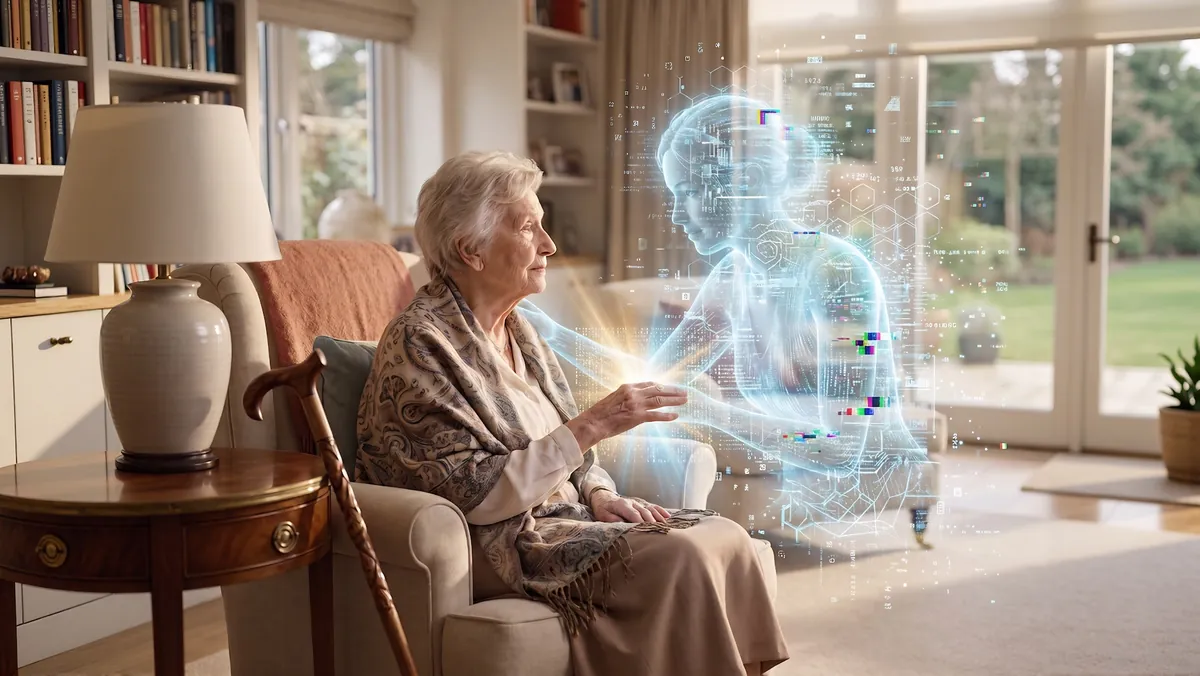
An elderly woman in an armchair reaches toward a glowing holographic AI companion in her living room.
Concept illustration

AI home assistant for older adults

Voice-first assistants designed to support medication reminders, label reading, fall detection and SOS, and to work without a touchscreen for people with motor impairments.

An older man wearing AR glasses on an autumn park bench smiles at a holographic young woman sitting beside him.
Concept illustration

AR-glasses companion

A proactive spatial avatar that shares the user's context, starts conversations and supports holographic telepresence with family, aimed at easing isolation.

Rehabilitation and therapy modules

VR modules for rehabilitation, pain management and cognitive therapy, built to your clinical protocol.

How a project runs

  1. Define the behaviour. One thing learners should do differently, and how you will measure it.
  2. Prototype. A short VR or AI experience with a clear learning objective and a debrief.
  3. Pilot with measurement. Pre/post assessment and, where possible, a comparison group.
  4. Deploy and iterate. Roll out, review the analytics, refine the content.

You brand it. We build it.

Kucharski Consulting works white-label, as an engineering partner behind your brand: from clinical concept and 3D content to Meta Quest, Apple Vision Pro and AR glasses.

You bring

  • Therapeutic area and clinical protocols
  • Patient insights and KOL access
  • Regulatory and brand guardrails
  • Commercial goals and KPIs

We deliver

  • VR / MR simulation design and engineering
  • 3D characters, environments and spatial audio
  • AI avatar behaviour and voice interaction
  • Deployment, analytics and iteration

Planning a VR or AI training pilot?

Tell us the condition, the audience and the behaviour you want to change. We will come back with a prototype outline and a way to measure it.

Images and the sample dialogue are concept illustrations, not screenshots of client products. Neurocrine and INGREZZA are trademarks of their respective owners; no endorsement is implied.